
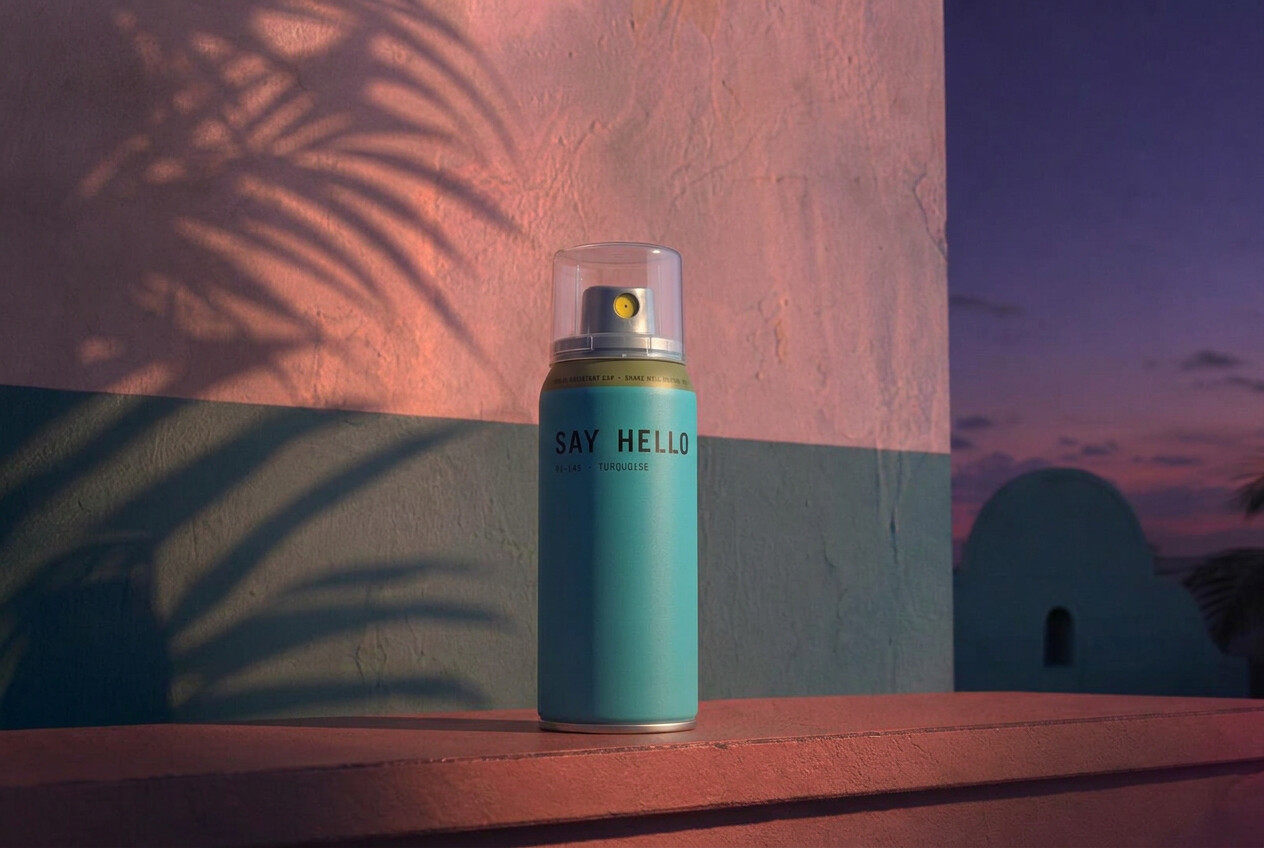
Every kitchen tool is an answer to a moment. The pan answers heat. The chiller answers time. Nothing had ever answered the last thirty seconds — the part where a dish stops being cooked and starts being seen.
Airbrushes exist, and they are wonderful, and nobody wants to break one down at eleven at night. Dusts blow away. Gels wet the surface and slide. The finish — the part of the plate that carries the whole idea — was still being improvised.
So we borrowed from two places at once: the film-former stack that makes confectionery airbrush color set dry and matte, and the nitrogen bag-on-valve architecture behind oral sprays. One flashes off in fifteen seconds. The other keeps pressure flat from the first spray to the three-hundredth and never lets the product touch metal.
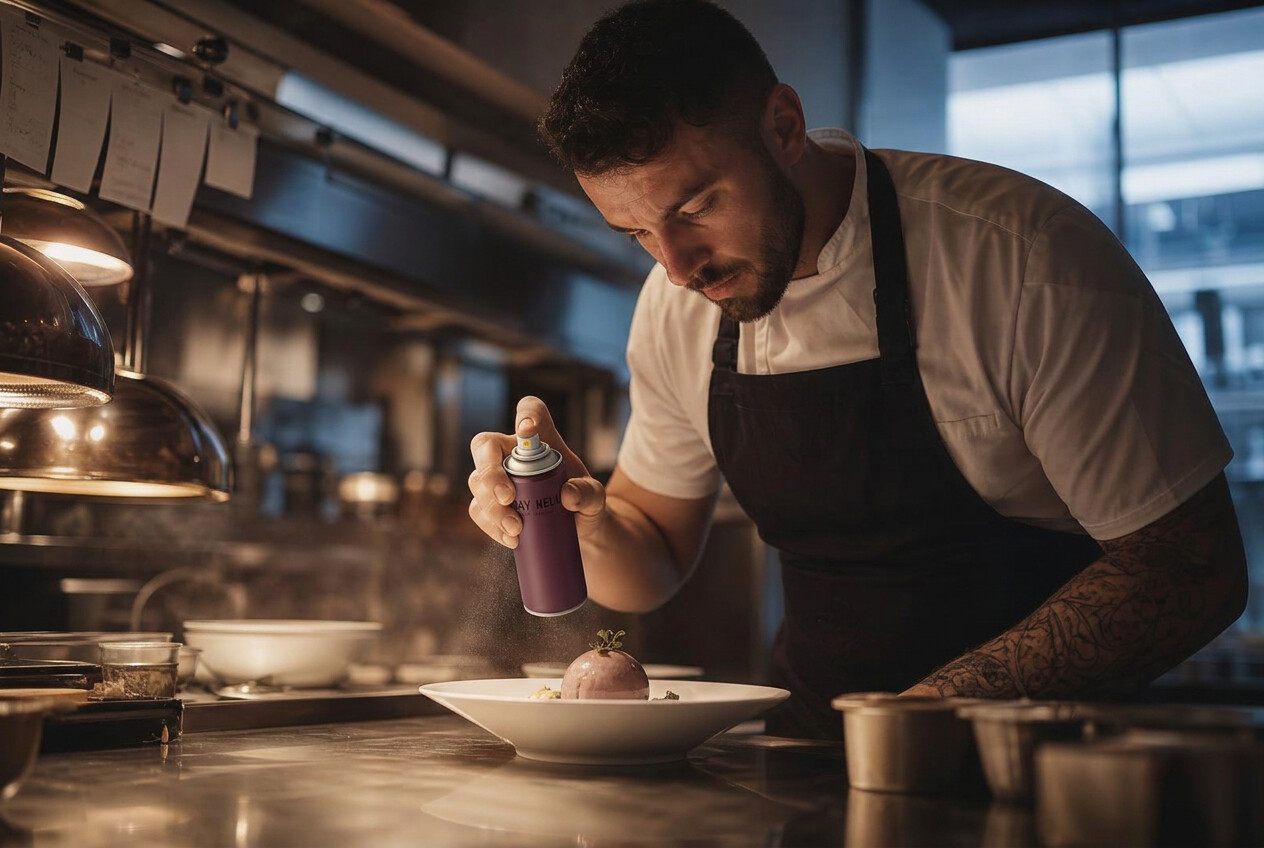
Then we did the part everyone else skips: we printed the dose where the hand already is. Three sprays, one millilitre, ten milligrams, one serving — on the collar, on the card in the carton, on this website, in the training. Nothing about spraying feels like dosing, which is exactly why the number has to be impossible to miss.
Culinary has always evolved by tool. This is the next one, and the first run is small enough that the people who reserve it now will genuinely be the first people to cook this way.